Vienna Adventures (with bonus Peter!)
- Sheri Johnson, RD
- Mar 14
- 13 min read


While we had visited Vienna twice before (is our privilege is showing?), both times were day stops on a river cruise. We had never made it past the downtown tourist center, so we were excited to experience what it was like to actually live in this fine city. Vienna is frequently at the top of the World's Most Livable City list, and it isn't hard to see why. After five weeks in this historic city, Brad and I have put it at the top of our own list of the most livable cities we have stayed in, too.
Of course, the history, culture, and infrastructure of the city add greatly to its livability, but a key reason it tops the list is the affordability of housing. Most residents are renters, and Vienna has the lowest cost rent of the major western European cities due to its social housing and rent control programs. It was the least expensive of our European apartment rentals so far, which was surprising for such a highly touristed city.

Vienna also has a fabulous public transportation system consisting of buses, trams, trains, and subways, and we tried all of them with great success. One monthly pass, purchased and kept on our phones, got us unlimited access to all of the transportation options within the city without having to validate or even show it when entering and exiting. We were only asked to show our passes once in the five weeks we were there during a random tram check.
We even had a tram stop directly outside of our building, and trams came by every ten minutes. We could see the stop out our front window, so we could check the electronic sign board to see when the next tram was scheduled to arrive.
Our Vienna Home
Almost three million people live in the city, but you wouldn't know it because of the efficient and practical way the city is laid out. With the exception of the historic downtown area, most of the city is made up of blocks and blocks of five story buildings with shops and stores on the bottom level and residences on the upper floors. Our apartment was on the first floor (which would be called the second floor in the US), and it was directly above a supermarket. We got very used to being able to stop in for a few groceries any time we needed them.
Though we were less than a mile from the downtown tourist center of town, it was clear that this was where people actually lived. We enjoyed watching the bustle of the city outside our window as people waited for the tram to work or walked their kids to school. Some of the workers we encountered in our neighborhood didn't speak English, so we got more practice using Google Translate to accomplish our daily tasks. Or, as we learned, you could just grab the nearest young person who could usually translate for you. Our place was classy, airy, and welcoming with huge front windows. Being January, we enjoyed watching the snow fall and the icicles on the lamps form while staying warm and dry inside.







Downtown Vienna & The Habsburgs' Palaces
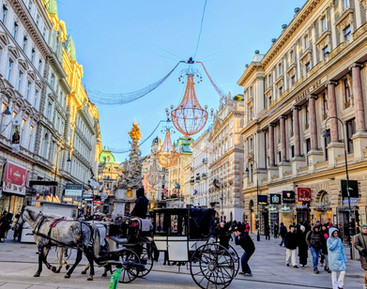
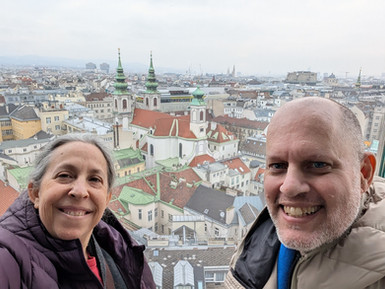
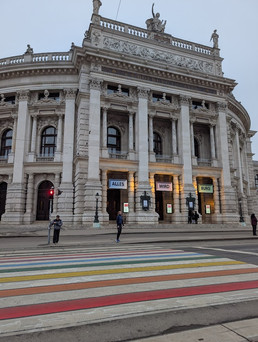
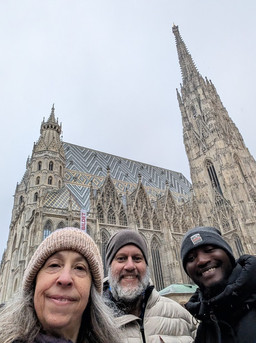
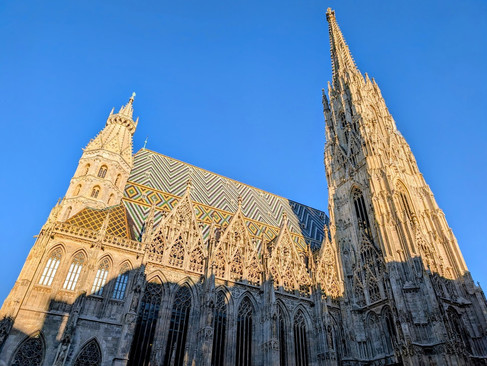
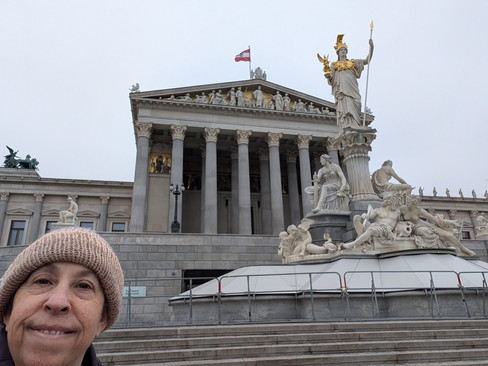
Though we arrived in Vienna a couple of days after New Year's, we were happy to see some of the holiday decorations and lights were still up on many of the buildings and streets. The downtown is made even lovelier by its designation as a pedestrian only area making walking a treat. We wandered through these streets often to admire the buildings, listen to a Rick Steves audio tour, grab a meal, see a movie, escape an escape room, or just to people watch. The historic city center dates back to Roman ages and features museums, designer stores, coffee houses, restaurants, a spectacular gothic church (St. Stephen's Cathedral), parliament buildings, city hall, an opera house, and most notably the Hofburg palace of the Habsburg dynasty.
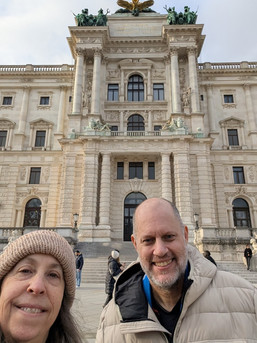
Easily identifiable by their royal inbred overbites, the Habsburgs ruled over the Austrian Empire for over 600 years. They also built the sprawling Hofburg imperial palace complex which dominates downtown Vienna and continues to draw in tourists with its enormous and elaborate structures. Though the last Habsburg ended his rule over 100 years ago, the Hofburg still houses the Austrian government including the president's office. The complex also features a museum, library, horse riding school, chapel, halls, wings, gardens, statues, and a collection of the royal jewels.














Sacher Hotel and Sacher Torte
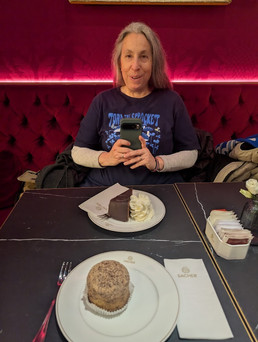
One of the more famous downtown Vienna establishments is the Sacher Hotel. It was here in the hotel's restaurant in the mid-1800s that the now world famous Sacher Torte was allegedly invented. There is some argument over exactly how, when, and where it was invented, but it is always made with chocolate sponge cake, apricot jam, and covered in a chocolate glaze. Sounds delicious!
We headed to the Sacher Hotel to get a taste of the original version which has not changed in 150 years (allegedly). The cafe was certainly an interesting sight with all red velvet booths, all red walls, and old timey, framed photo decor. I tried the Original Sacher Torte, and Brad got the Original Sacher Fudge Cake. We were less than impressed with both.
The Sacher Torte was dry and rather tasteless, though the chocolate glaze was pretty good. Brad's Fudge Cake was more like a chocolate chip muffin. It was pretty good for a chocolate chip muffin, but it did not fit our vision for what a fudge cake should be. On top of the mediocre sweets, both our hot chocolate and latte were served lukewarm. We give the whole Sacher experience a solid "meh". Though we are certainly glad we gave the famous place a try, once was enough.




Lipizzaner Stallions - Majestic!
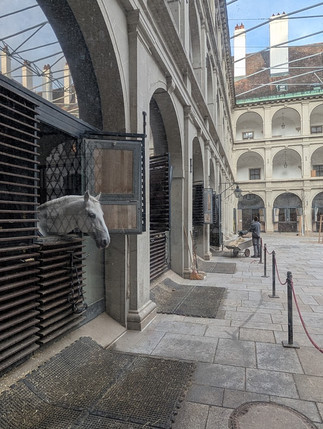
Another famous downtown Vienna attraction is the Lipizzaner Stallions of the Spanish Riding School. We did not attend any of their performances, but we did catch a glimpse of the distinguished white stallions poking their heads out of their stalls on one of the warmer January days. As you can see in the first picture below, their majesty and dignity must be seen in person to be truly appreciated. We also caught a glimpse of the barn cats who keep the place rodent-free. We snapped a shot of one of these working cats who we caught majestically burying his poo.





Vienna Aquarium
Austria, being a land-locked country, is an unlikely place to find a great aquarium. It is, however, a great use for an old flak tower leftover from World War II. These concrete blockhouses were built in Germany and Austria by the Nazis to provide anti-aircraft defense and also to serve as defensive bunkers. So, what do you do with a massive concrete tower in the middle of your city when the war is over? Some were repurposed as climbing walls, data centers, or even a power plant. Vienna prettied theirs up and turned it into a 12 story aquarium!

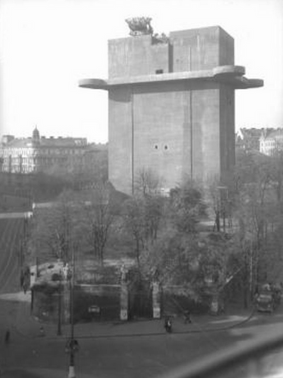


The Haus des Meeres, or House of the Sea, now features 11 floors of creatures to view. Some of our favorites were the jellyfish, sharks, stingrays, sea horses, and the Japanese Spider Crabs which really look like a cross between a spider and a crab (see creepy picture below). It's not the largest aquarium we've been to, but the displays were well laid out with a great variety of sea creatures. We spent a good half hour just watching the schools of fish interact in one of the largest tanks.
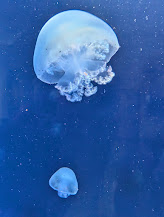


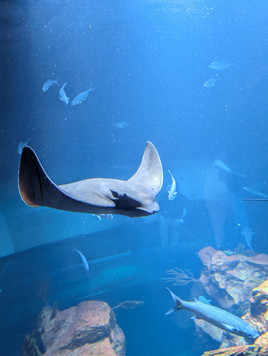

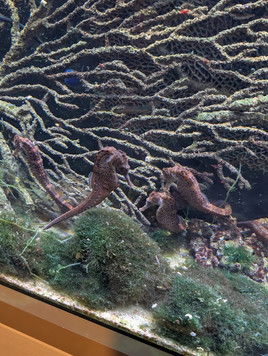
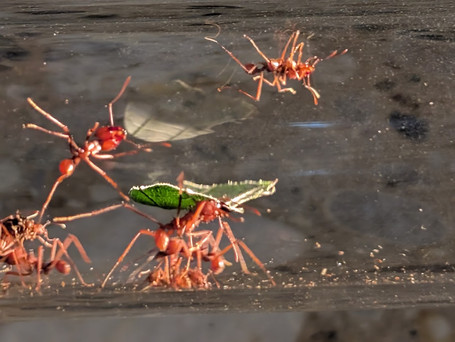
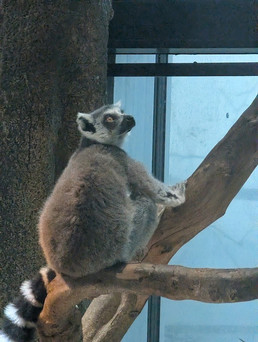
It would have been a nice enough aquarium on its own, but we were surprised to also find several walk-through enclosures featuring a variety of free-ranging monkeys, tortoises, lizards, birds, bats, lemurs, and adorable Australian marsupials. Walkways and rope bridges wander through the enclosures where the animals can leap and fly around you. Another of our favorite exhibits was a system of connected, clear pipes threading through an entire floor, even through other exhibits, ferrying Leafcutter Ants on their travels to and from their hills and the leaf pile.





Schönbrunn Palace
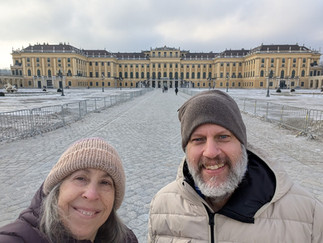
The Habsburgs decided (as bored monarchs will do) that they needed to build another palace outside the city where they could spend their summers amongst nature (but in ultimate comfort, of course). Schönbrunn Palace was built on an old hunting ground outside of the city back in the 1750s. Almost 300 years later, the city has grown out, around, and past the palace, so it is no longer the city escape it once was. The UNESCO World Heritage site is, however, still very much a place of nature as it contains a vast complex of gardens, and it even has its own zoo.
Visiting the summer imperial palace in the 21st century consisted of hopping on a quick 10 minute tram ride from our apartment for the not-so-distant 2 mile trek "outside" of town. While the gardens and grounds were indeed massive, they were not as impressive as they would probably be in spring and summer. The grounds were covered in old snow and slippery ice, the trees had no leaves, and there were no flowers.
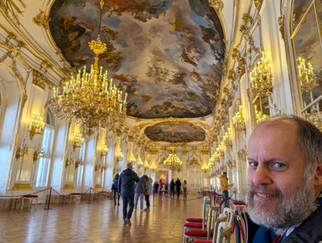
Fortunately, the inside was much more impressive, and much warmer! We took a self-guided tour of many of the palace's rooms and learned about the people who lived there and how they lived. As someone who can fit everything I own into one suitcase, it all just looked like a lot of stuff you have to dust to me. The cleaning would never end. I guess I wouldn't make a good empress.
In 1762, a six-year-old Wolfgang Mozart played a concert for the empress, Maria Theresia, in Schönbrunn's Hall of Mirrors. As the story goes, when the young prodigy finished his performance, he hopped up onto the empress's lap and hugged and kissed her. Wolfgang's ten-year-old sister Maria Anna performed as well, but no one remembers her because she was just a girl.




Peter Adventures
Lucky for us, Vienna is just a two and a half hour train ride away from Budapest where our good friend Peter is finishing up his master's degree at Corvinus University. If you don't know about Peter (do you even read our blog??), you can catch up on his story in our Budapest Adventure blog entry. We were treated to TWO visits from Peter while we were in Vienna, each for few days.
Life is always a bit brighter and everything seems a bit newer when we get to see it through Peter's eyes. Time spent together is definitely cherished, and we appreciate all the time he spent with us. He loves adventure as much as we do, thankfully! We got to introduce him to his first tacos and quesadillas, some nibbling fish, and we took a couple of fabulous day trips outside of the Vienna area to see more of Austria's sights.





Castles in the Fog
Both of the day trips we took with Peter featured castles shrouded in fog. I guess that's just what you get in January in Austria. Liechtenstein Castle, in the first two pictures below, makes a very dramatic picture when you can see it. Go ahead, click on the link to see it. We had to settle for creepy and spooky, as it was barely visible. Our tour only made a short stop there, so we couldn't even get close enough to see anything other than a hulking shape in the mist.
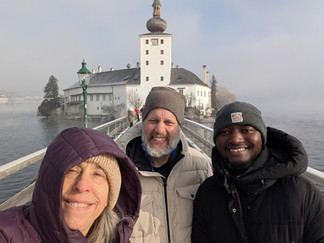
Schloss Ort Castle sits out a ways on Traunsee Lake which was, on the day we visited (you guessed it) covered in fog. Fortunately, much of the fog lifted as we walked around, and we got some decent shots of the nearly 1,000 year old castle. The misty fog also created some very cool looking ice-covered branches that dotted the island the castle sits on.





Seegrotte Caves and Underground Lake
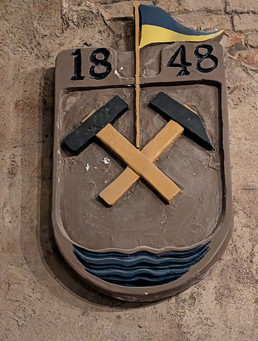
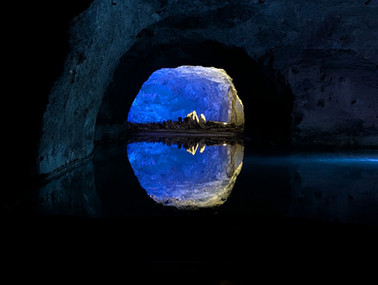
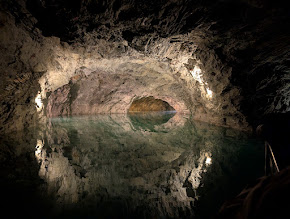
This underground cave system started out when a farmer went digging for water. He never found water, but he did find gypsum instead. Thus began the Seegrotte Gypsum mine which ran until 1912 when a blast ironically found.....water! The mine quickly turned into the largest underground lake in Europe. The caves and underground lake have made their living as a tourist attraction since the 1930s with the exception of World War II when Nazi Germany used it to secretly build jet engines.
Our guide treated us to a tour of the mine and a description of its history and uses. After a long walk down a dark tunnel, we went deeper into the mine down a cement staircase where a boat awaited us on the underground lake. We cruised on the crystal clear waters and took way too many pictures of all the different lighted caverns. Brad and I were definitely reminded of the Pirates of the Caribbean ride at Disneyland, but without the Yo-Ho song or screaming children.
Our fun with the underground cave didn't end there. We had learned that the 1993 movie The Three Musketeers was filmed in this very cave, so of course we had to watch it! Indeed, the opening scene has Tim Curry (the villain, obviously) sailing through the same underground lake on a dragon boat. Some of the dungeon scenes were also filmed in the caves. With a whopping 33% critics' score on Rotten Tomatoes, and featuring Charlie Sheen and Keifer Sutherland, you obviously have to see it, too! It's a true 90's gem.









Hallstadt
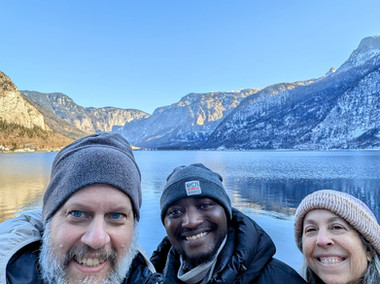
The Instagram famous mountain town of Hallstatt was our favorite of the trips we took outside of Vienna. It is surrounded by the Austrian Alps, and the town's buildings frame the southern shore of a beautiful lake. This tiny town only has fewer than 800 residents, but it can reportedly get up to 30,000 visitors a day. Fortunately, we visited in the off season with only a few other buses. It was fairly quiet with many of the stores and restaurants closed for the winter season, but enough were open to have service options.
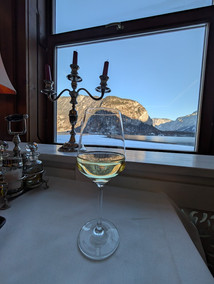
Tiny but mighty, Hallstatt is worthy of its UNESCO World Heritage designation, and we couldn't stop taking pictures of the town and its surroundings. We had a lovely lunch with the best view right along the water. Of course, we had to take our turn at the famous Instagram spot along with all of the other tourists. I do have to admit it makes a spectacular photo.






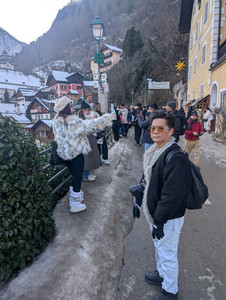
I found it amusing to watch the photo frenzy to get the perfect Instagram selfie. Some of the tourists had obviously spent a long time deciding on the perfect winter outfit to make the perfect winter Hallstatt selfie. It was a fairly chilly day, but the furs and moon boots were a bit much.


Vienna Zoo
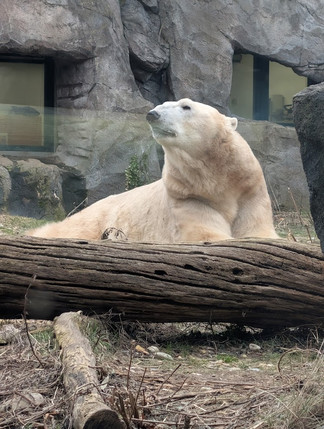
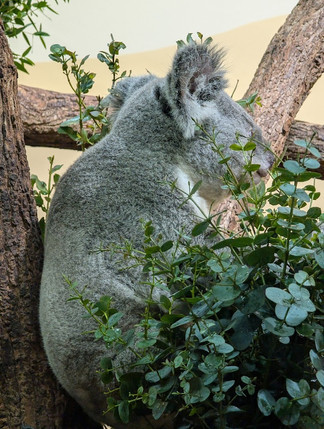
Brad, Peter, and I headed back to the grounds of Schönbrunn Palace, but this time to visit the zoo. Established in 1745 as the imperial family's menagerie, it claims to be the world's oldest zoo. The menagerie began and grew as foreign leaders brought the animals as gifts to the monarchs. In 1778, it was first opened to the public to "decently dressed persons" on Sundays. Fortunately, no such requirement exists to visit today, and they let us poorly-dressed vagabonds in.
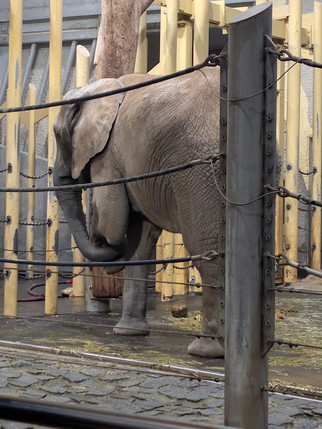
The whole zoo was very well maintained with large animal enclosures featuring both inside and outside areas. The animals had lots of enrichment opportunities to keep from being bored. We particularly enjoyed watching a training session with the elephants. The elephant enclosure even has two resident "Hauskatze" who are deemed important enough to have their own descriptive placard like the other zoo animals (seen below). "Frida" and "Pablo" are two rescue housecats who have the important job of keeping the elephant enclosure mouse-free. Even the zoo food was a big step up from a typical theme park style chicken strip meal.








Food
Though the food at the zoo was unexpectedly delicious, I can't say the same for the disappointing baked goods we tried in Vienna. The city has no shortage of bakeries, and beautiful cakes and pastries can be found in many shop windows. Unfortunately, they mostly looked better than they tasted, much like our experience with the desserts at the famous Sacher Hotel.
The cinnamon rolls pictured below were in a shop that only sold cinnamon rolls, so you would think they would know how to make them right. They had a changing variety every day of delicious sounding and beautiful looking flavors like red velvet, Dubai chocolate, and Biscoff. Alas, the roll was not gooey, cinnamon-y, or sweet like you would expect. It was more like rolled up bread with frosting on top. Disappointing.
The same with the bagels. I have not had a good bagel since we were in New York (I know, poor non-stop-traveling me), so I searched out a shop with "bagel" in its name. Again, this shop only made bagels, so they should know what they are doing! Alas, my bagel was just bread with a hole in it. More baked disappointment.


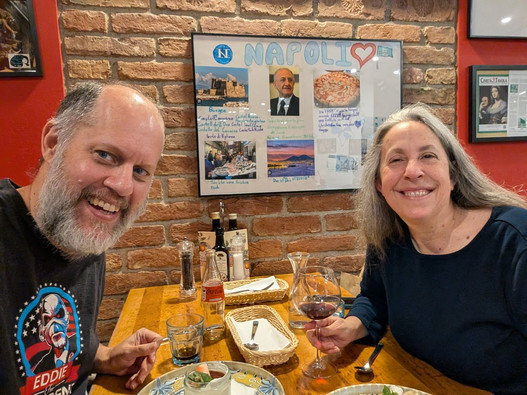
Fortunately, the Vienna food scene was redeemed by some excellent culinary experiences outside of the baked goods arena. We enjoyed excellent Indian food at several different restaurants. We found a lovely little cafe on a very cold day where we warmed up with hot chocolate (Brad) and a mulled wine (Sheri) which was served deconstructed so it could be customized to taste. Fabulous and warming! We celebrated our 18th (!) wedding anniversary with a lovely Italian meal complete with dessert and limoncello.
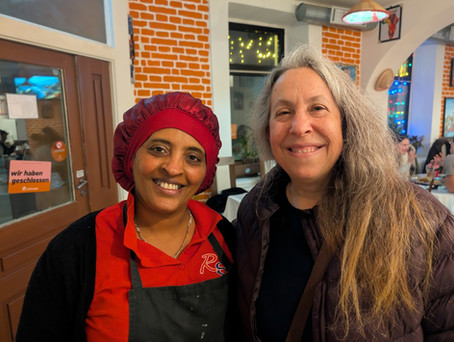
Our favorite, and most unexpected, find was a fantastic Ethiopian restaurant that we visited weekly. We got to know the owner and chef who was impressed that we ate the food with our hands, as is traditional, and not with a knife and fork as other patrons did (what the heck??). We explained that we were from Los Angeles and used to frequent the restaurants in the Little Ethiopia section of town. As we described Little Ethiopia, her immediate question to us was, "Are they alright?" News of ICE raids, and their subsequent brutality, and sometimes mortality, is in the front of everyone's mind, even halfway around the world.






All that food eventually ends up in one place, and that place in our apartment was quite unique. I will now turn the blog over to Brad for details on this "feature":
Special Feature: The Shelf Toilet by Brad
That's not an elf on a shelf.

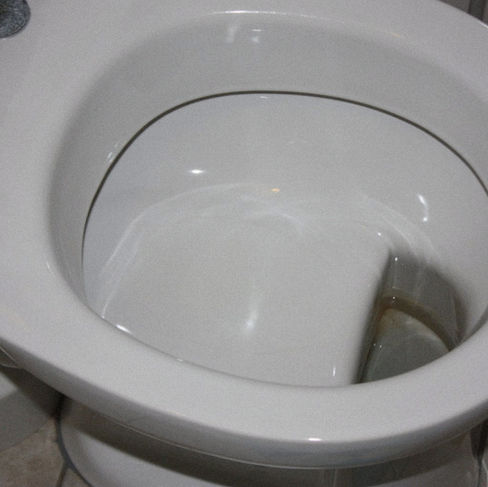


Apparently this style of toilet is somewhat common in Europe. While I give the Europeans credit for doing practically everything better than Americans, I can safely chant USA! USA! when it comes to commode engineering. The Germans, Polish and Russians use this abomination of design. They all blame each other for the style saying that "insert nationality here" likes to look at their handywork. There is another theory that suggest the design is meant to make it easier to inspect the donation for worms or parasites. After said audit is complete a torrent of water is released and it pushes anything on the shelf to where it rightly belongs.
It was a traumatic and horrifying experience every time I used the toilet. While my diet has improved dramatically since Sheri entered my life, it still is not what it should be. I don't eat as many fruits and vegetables as I should, and the result is a bulky (I prefer manly) product. What the picture above fails to convey is how little room there is between the point of egress and the shelf. The less said here the better. So naturally I will say more. On multiple occasions there simply wasn't enough room between point "A" and point "Shelf" and I will leave it at that. I will merely refer you to the second picture above.
Finally, on multiple occasions the deluge of water was not powerful enough (again, manly product) to clear the shelf. It would take multiple attempts before the ledge was once again clear for the next PTSD inducing encounter.
Come to Vienna for the culture, the history, and the people, but if you need to take a dump, America is the place to be!
Now back to Sheri!
Goodbye to the Habsburgs
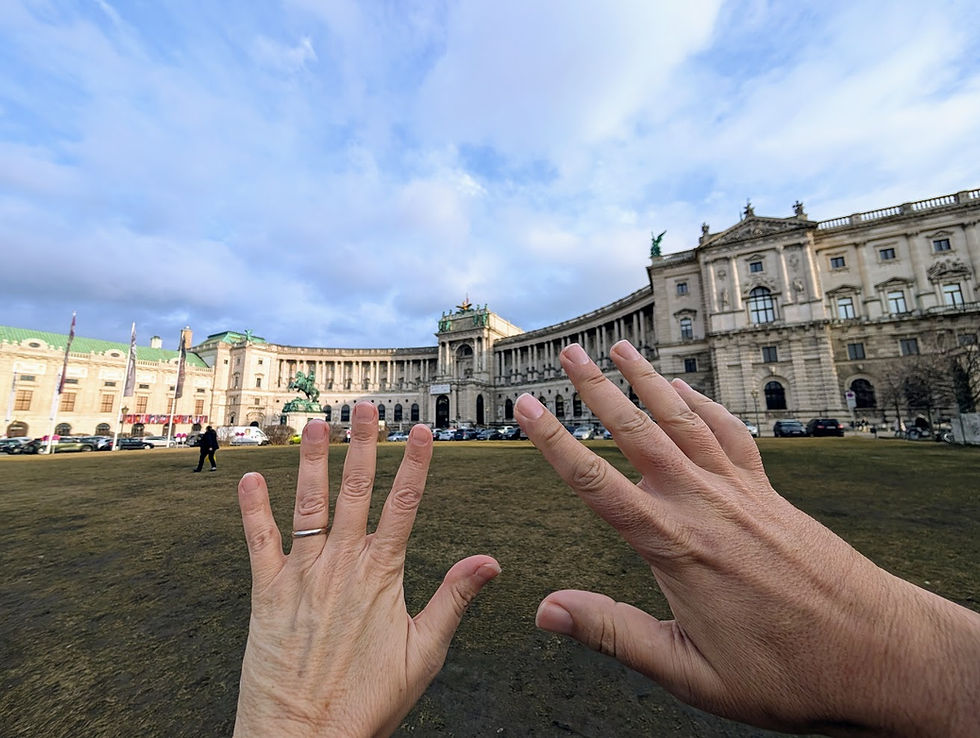
As it always does, the time moved quickly in Vienna, and it was soon time to say goodbye to one of our favorite cities. We both agreed that we could spend a lot more time in this most livable of places. The history and culture alone make it worthy of a long visit, but its infrastructure and ease of living make you want to stay a lot longer. We waved a last goodbye to the Hofburg on an unusually sunny early February day, and packed up our suitcases for the next adventure.
Next stop, Albania!
Sheri & Brad


The poor baked goods combined with the toilet situation leaves much to be desired.
Thank you for the wonderful tour! Even Brad's section. 😄 Love you both ❤️, Lorri